Density Functional Theory (DFT) and Diffusion Kinetics
-
Utilizing a combination of custom-built software programs and open source QuantumEspresso, we predict ground state atomic positions and energies through extensive DFT calculations.
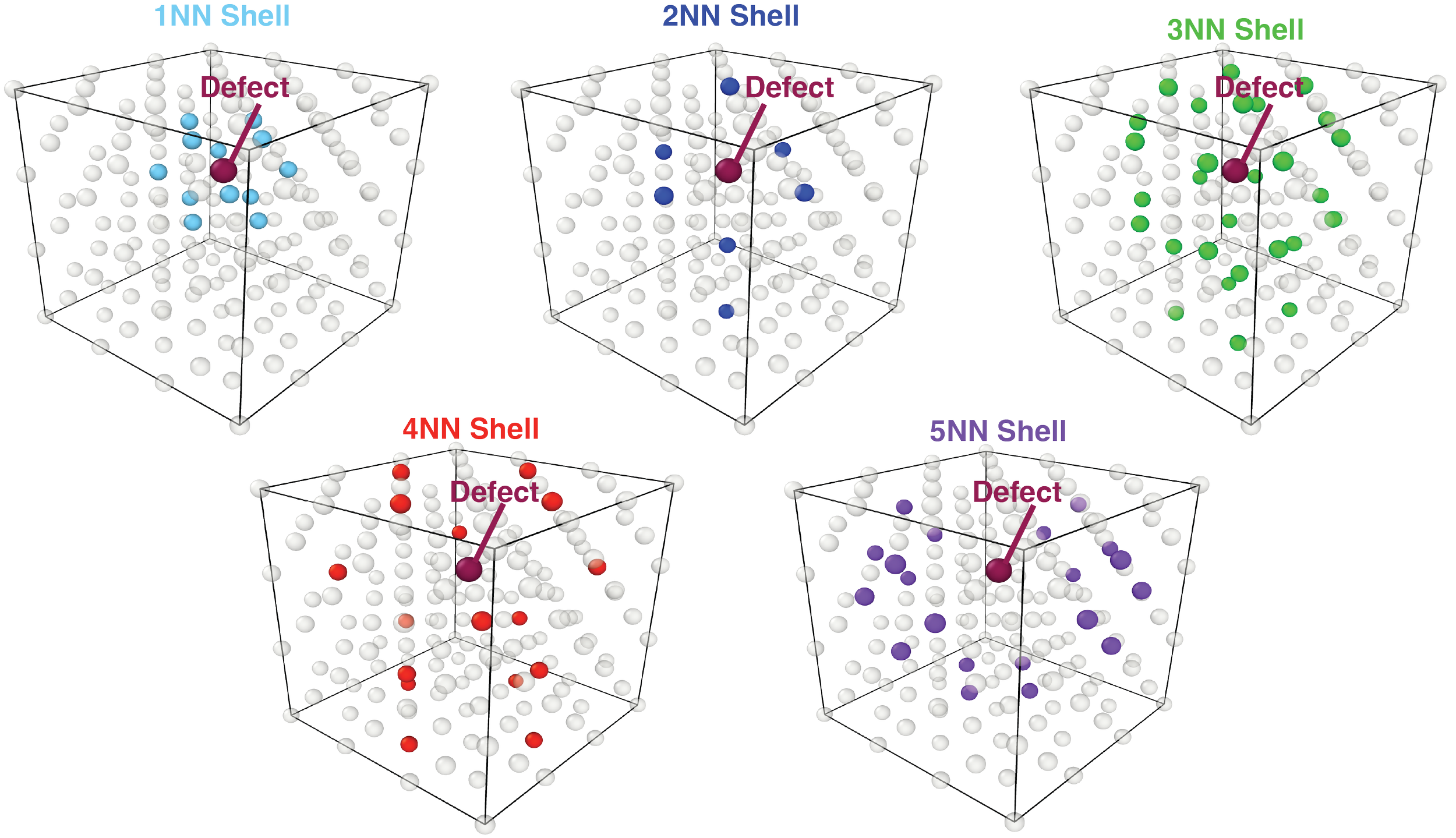
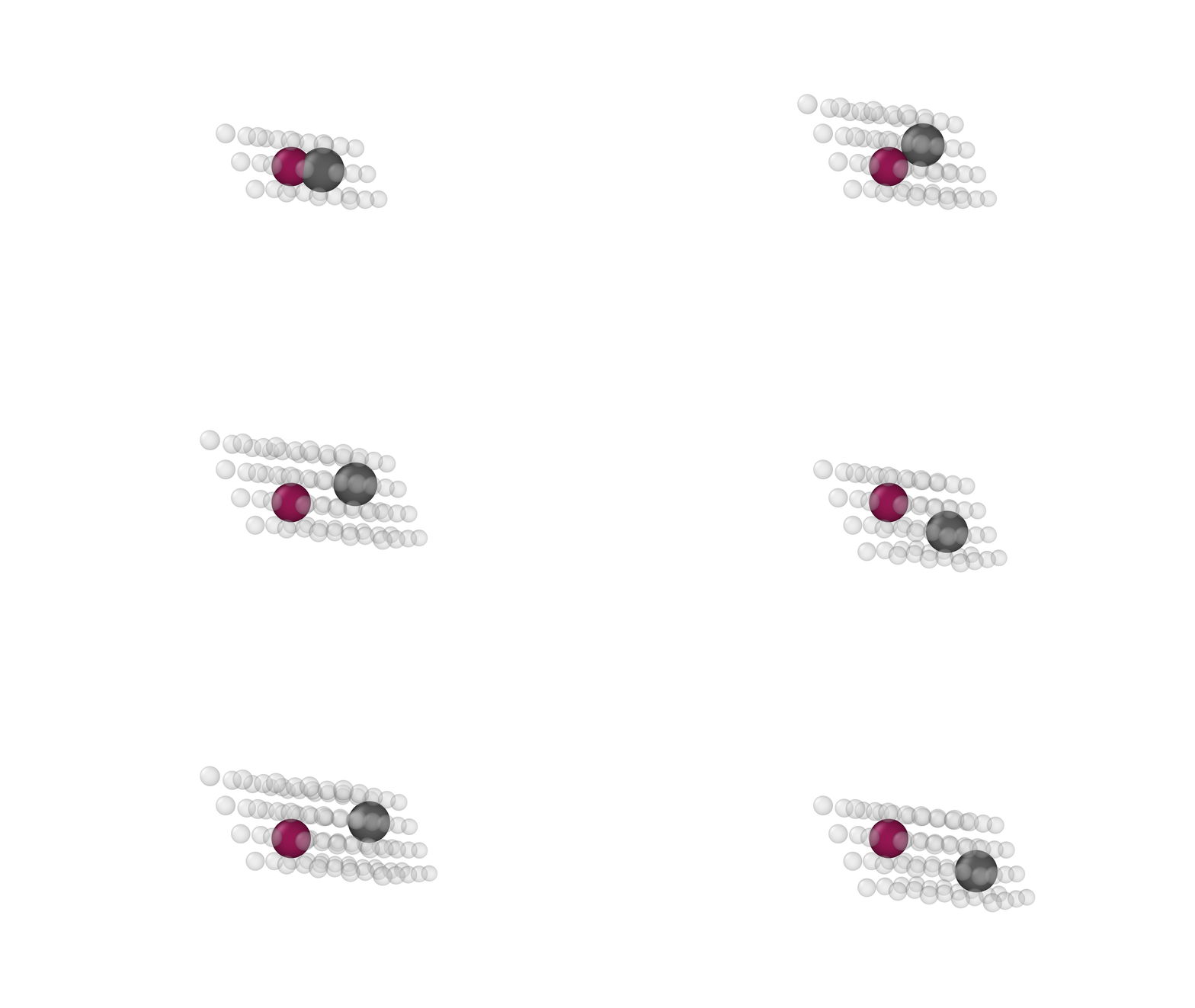
To model the impacts of defects such as vacancies or solute substitutions, we build supercells from optimized unit cells, inserting defects into the center to avoid interactions with their periodic images.
For multi-defect systems, we measure the impact of defect-defect distance by inserting secondary defects into shells from 1st-5th nearest neighbour distance.
For all systems, we allow the atoms to relax into their ideal positions (i.e., minimizing energy+forces) while maintaining cell boundaries. From the ground-state positions and energies, we can determine properties such as formation energy, binding energy, and identify coordinates for vacancy jumps within the matrix.
DFT calculations are run using in-house scripts on computing clusters provided by the Digital Research Alliance of Canada.
-
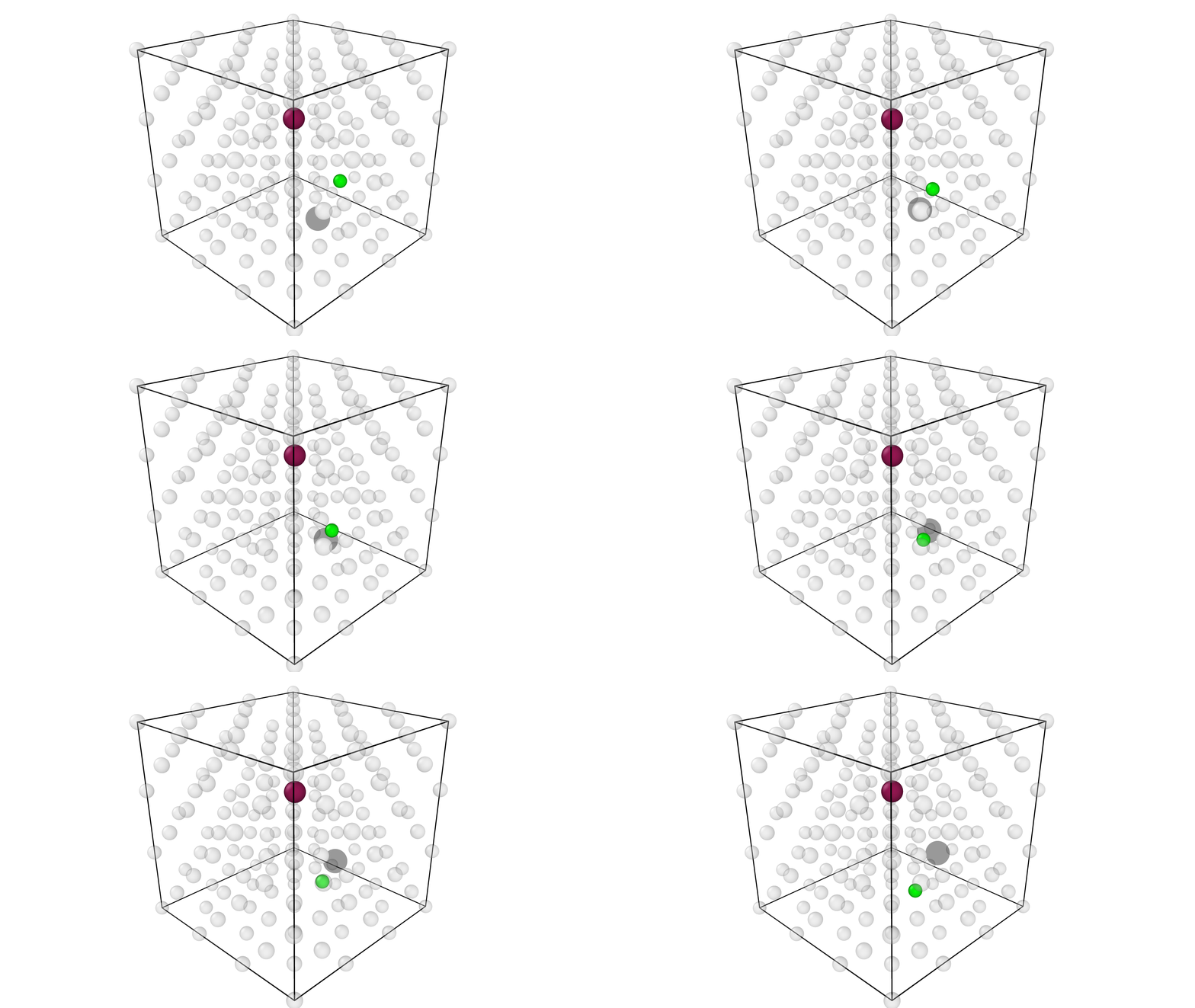
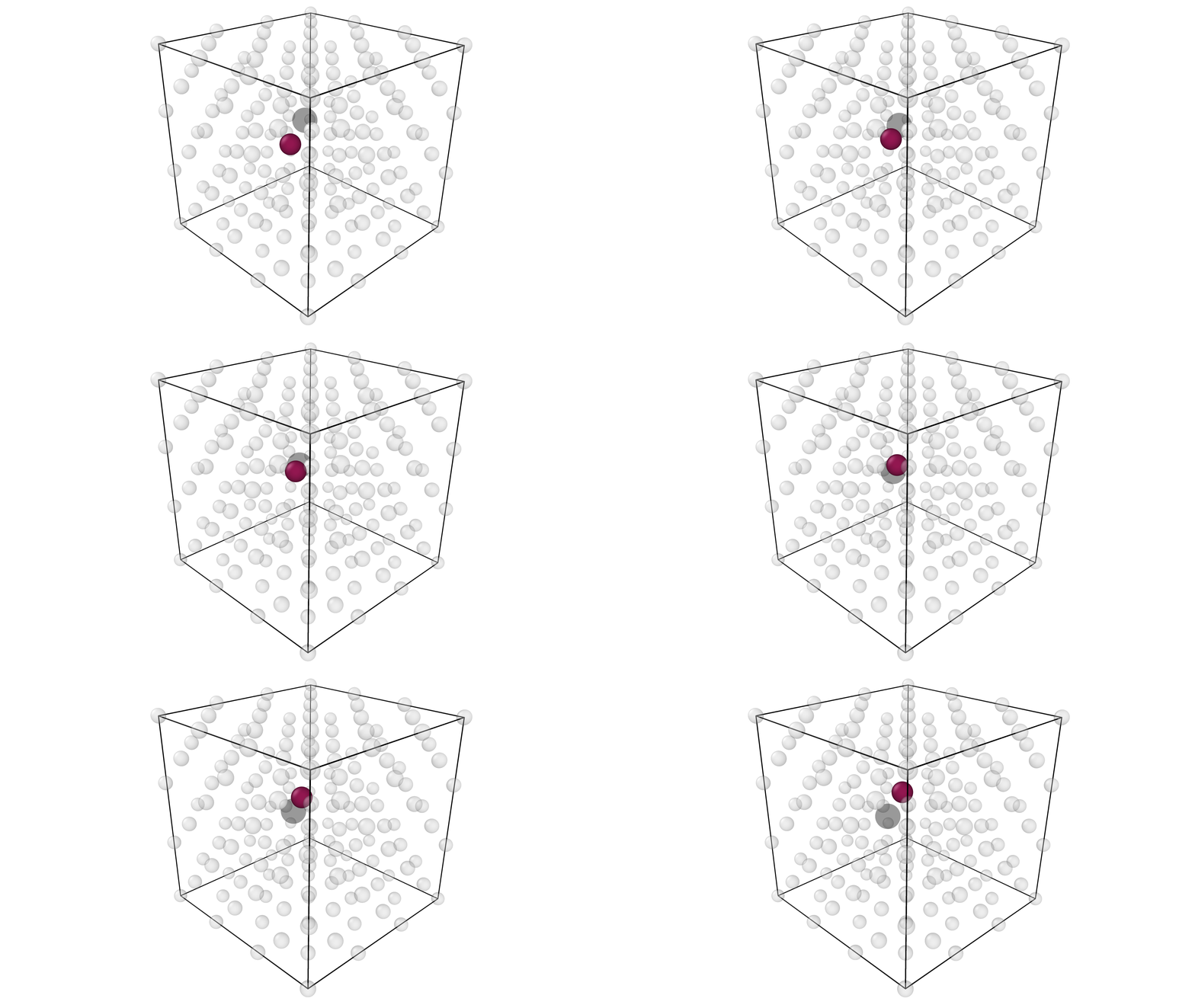
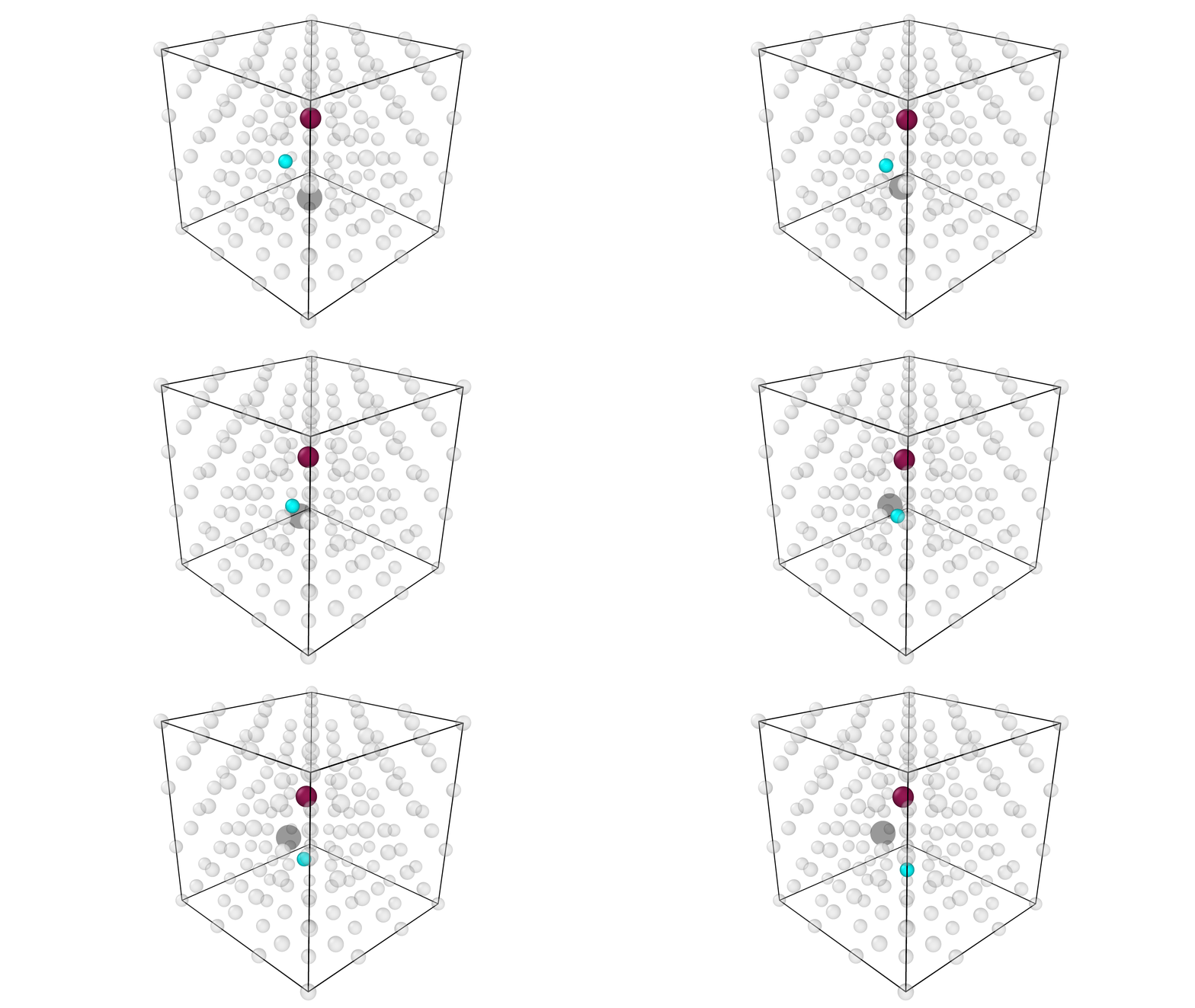
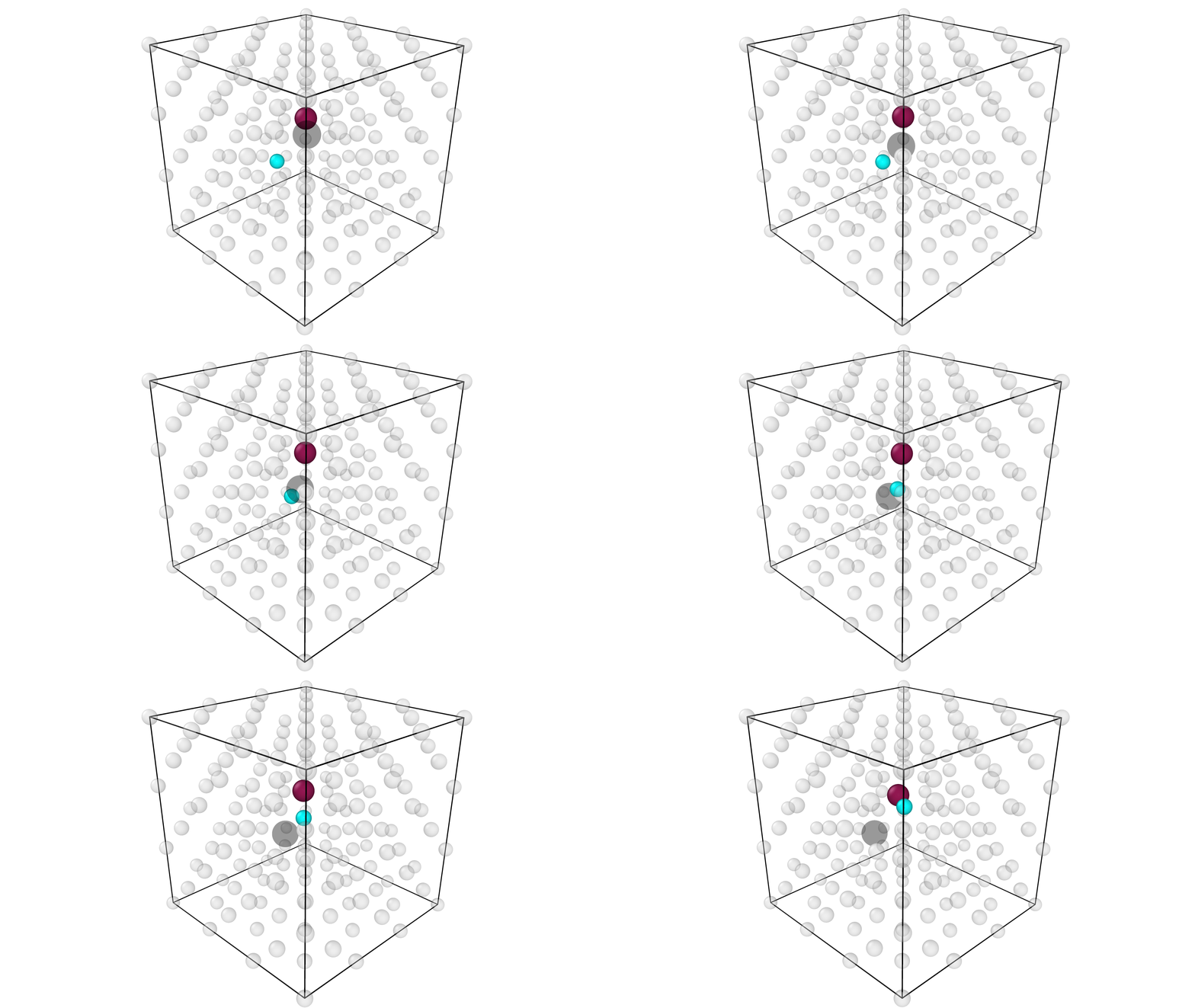
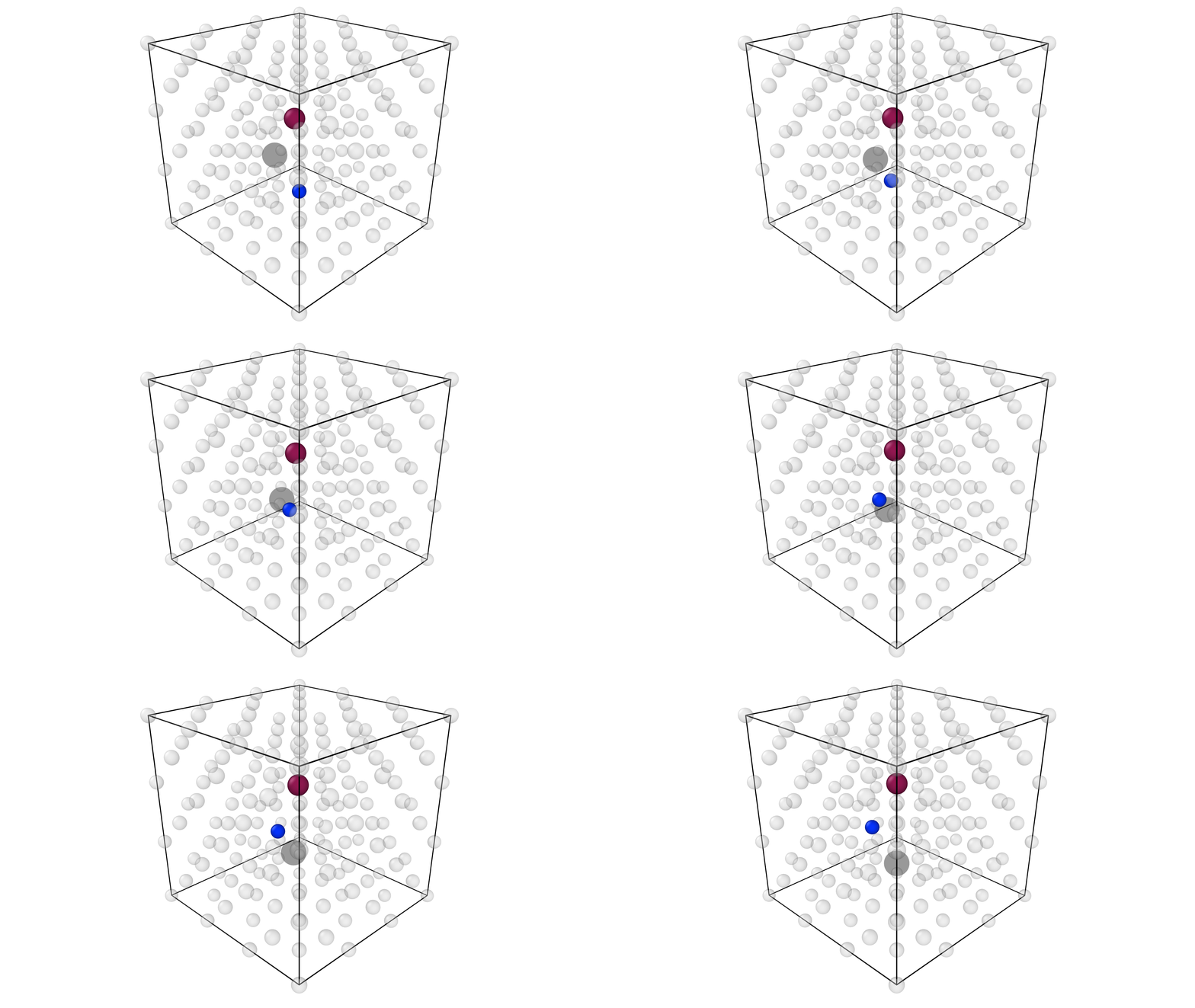
From initial supercells, we can determine possible vacancy jumps (1NN distance away from starting vacancy position) and run DFT-calculations on these jump coordinates.
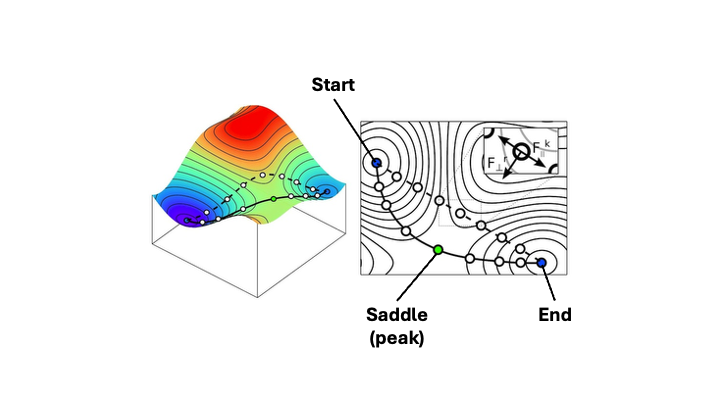
The calculation outputs for starting and ending jumps are then fed into nudged elastic band (NEB) calculations until they reach convergence.
NEB calculations determine the path connecting starting and ending positions, running DFT calculations for each point along the path. The point of highest energy, representing the transition state, is known as the saddle point.
Following NEB calculations, the saddle point is refined through a round of climbing image NEB (Ci-NEB) calculations.
Energy differences between the starting position and the peak energy along the path represent energy barriers for that type of jump, telling us whether vacancies prefer to jump towards or away from solutes.
DFT energetics are then fed into KineCluE, an open source program for determining diffusion kinetics.
KineCluE calculations determine Onsager transport coefficients, which relate the flux of a species to the chemical potential gradients in the system, allowing for the calculation of diffusion coefficients.
Plotting diffusion coefficients vs temperature and fitting to the Arrhenius equation extrapolates activation energies and jump prefactors, allowing direct comparisons of diffusivity for solute vs host atoms, as well as jump mechanisms (vacancy drag vs inverse kirkendall effect)
-
-
Explore how we utilize advanced computational methods to characterize the impact of solute addition to aluminum alloy systems, beginning with system creation through DFT-calculations in QuantumEspresso and diffusion kinetics in KineCluE.
Computational Biochemistry
Beyond materials science, I have extensive expertise within computational biochemistry. I have developed robust workflows for the in silico modelling of the protein actin, utilizing software including MODELLER, GROMACS, VMD, and PyMOL as well as custom-built tools in UNIX, Python, and Tcl.
-
Beginning with recent, high-resolution structures as references, structures for multiple actin isoforms and variants are generated in MODELLER.
Ligands are docked to the generated model to match the desired divalent cation (Mg, Ca) and nucleotide state (ATP, ADP-Pi, ADP) and critical post-translational modifications are added (methylated H73).
For polymeric F-actin, copies of the generated protomer are formed into a filament through structural superpositions in PyMOL.
-
To model protein behaviours in a cellular environment, we run molecular dynamics (MD) simulations in GROMACS on computing clusters offered by the Digital Research Alliance of Canada.
GROMACS works by creating a ‘box’ around our protein structure and filling the box with water molecules, along with desired solutes to match cellular salt concentrations (150 mM) and neutralize system charges (for example, Na and Cl).
The system then undergoes energy minimization, where protein sidechains are allowed to rotate to reduce forces acting on the system. Once energy reaches a minimum, the system is brought up to the desired pressure and temperature through isothermal-isobaric equilibration, allowing the water to reach a density matching physical conditions.
From here, production-run simulations sample various conformations over a given time period, driven by the protein’s inclination to move towards energy minimums.
-
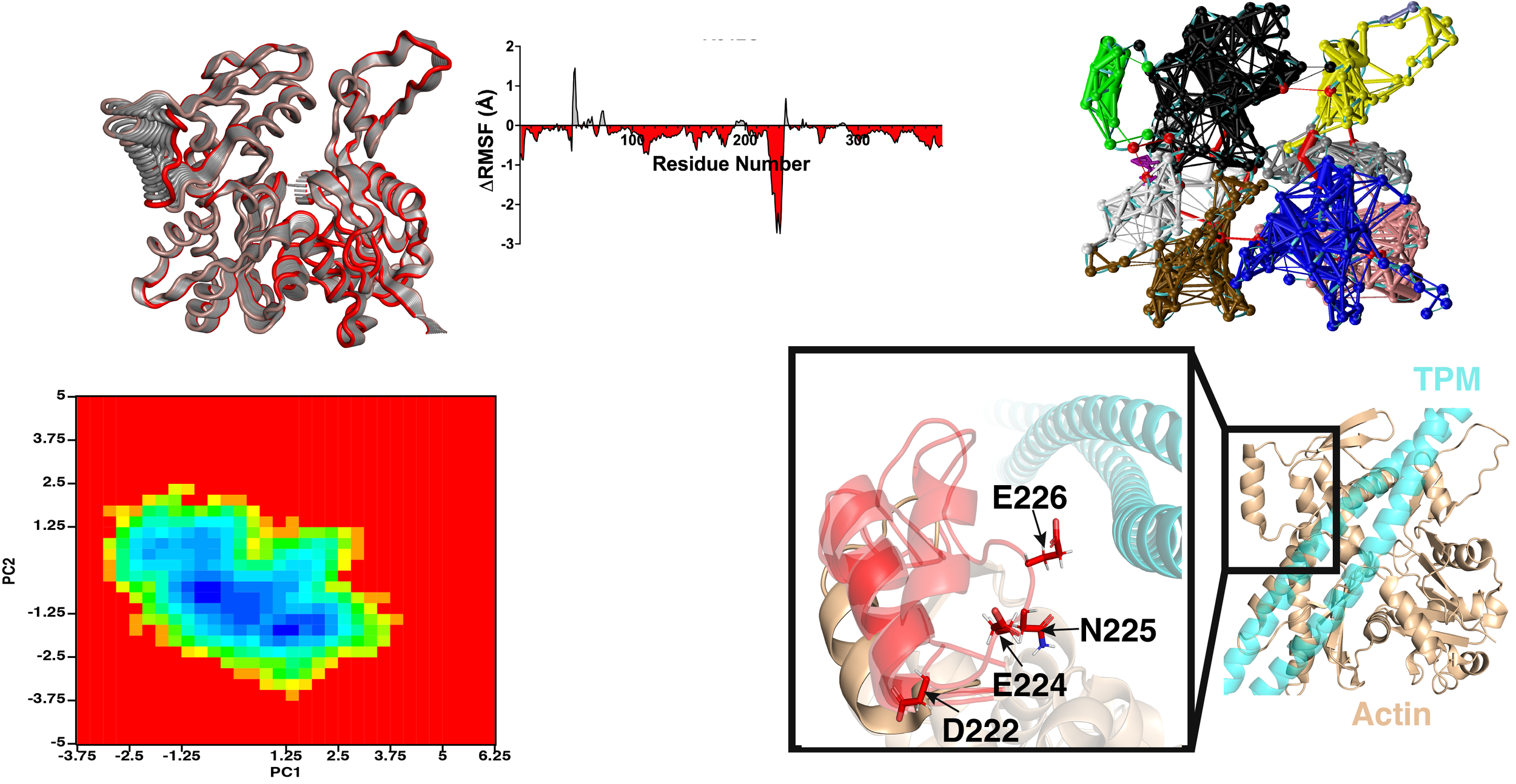
A wide range of analyses can tell us about how the protein’s structure changes, allowing us to model how protein-protein interactions are shifted and informing us about functional changes.
Changes to inherent protein properties can be assessed through root mean square fluctuation (RMSF), root mean square deviation (RMSD), radius of gyration, hydrogen bond formation, and secondary structure formation (among many other analyses).
In VMD, dynamic network analyses reveal changes to communities of residues with correlated movements and how communication pathways through the protein can shift.
In GROMACS, principal components analysis (PCA) can reduce the dimensionality of the data and identify the predominant protein motions over the course of MD. Extreme shifts can be projected onto the structure, and Gibbs Free Energy landscapes can be calculated which reveals frequently sampled conformations (representing energetically favourable structures).
All structures adopted over MD simulations can be clustered based on similarity, with the most common conformations used to identify frequent structural shifts through structural superpositions.
-
I have modelled the structural changes within actin from disease-causing amino acid substitutions through changes to properties such as residue flexibility, visual analysis of energetically favourable conformations, and examining changes to allosteric networks.
MD in the presence of binding partners has revealed how mechanisms of binding are disrupted by actin structural changes, while the calculation of binding energies and generation of energy landscapes shows how favourable binding positions shift.